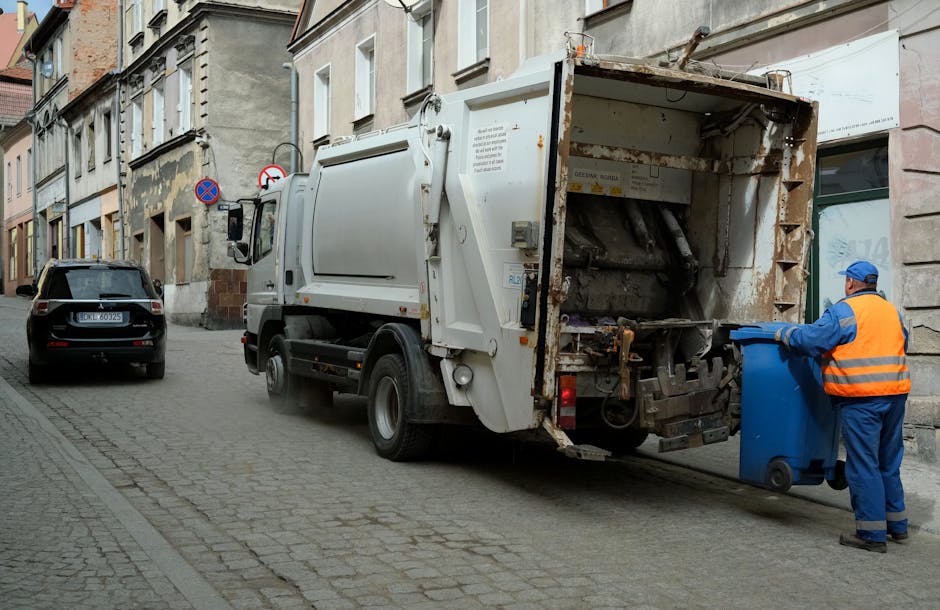
Bulky Waste on Bullsmoor Lane: Freezywater Removal Tips

If you have an old sofa blocking the hall, a broken wardrobe taking up the spare room, or a fridge that has somehow become part of the scenery, you already know how quickly bulky waste can turn from "I'll deal with it later" into a genuine headache. This guide to Bulky Waste on Bullsmoor Lane: Freezywater Removal Tips is here to make the whole job feel less overwhelming and a lot more practical. Whether you are clearing a flat, tidying a house, or sorting out a one-off load after a move, the aim is simple: remove the waste safely, legally, and without wasting a weekend.
Truth be told, bulky items are rarely just heavy. They are awkward, dusty, sometimes damaged, and usually in the one room you least want to wrestle with. So let's break down the real-world steps, the common mistakes, and the smartest ways to handle bulky waste around Bullsmoor Lane and the wider Freezywater area.
- Why bulky waste removal matters
- How the process works on Bullsmoor Lane
- Benefits of sorting it properly
- Who this is for
- Step-by-step removal guidance
- Expert tips that save time and hassle
- Mistakes to avoid
- Tools and useful resources
- Compliance and best practice
- Methods compared
- Real-world example
- Practical checklist
- Final thoughts
- Frequently asked questions
Why Bulky Waste on Bullsmoor Lane: Freezywater Removal Tips Matters
Bulky waste matters because it sits at the awkward crossroads of safety, convenience, and responsibility. A mattress leaning against a wall for "just a few days" can block access, attract damp, and make a room feel smaller than it is. A chest of drawers with broken runners can create trip hazards. An old washing machine left outside can become an eyesore very quickly, especially if the weather turns. And in a local street setting, clutter tends to become everybody's problem before long.
There is also the issue of disposal. Not every bulky item can simply be lifted into a car boot and forgotten about. Some items need separating, some need special handling, and some can be recycled or reused if they are treated properly at the start. That is where good planning makes a visible difference.
If you are already thinking in broader moving or decluttering terms, you might find strategic decluttering ideas for a smoother move helpful, because bulky waste decisions often start the moment you decide what stays and what goes. That one decision can save a lot of lift-and-shift later on.
On Bullsmoor Lane, where access, parking, and timing can all affect how a removal goes, a little forethought really pays off. Especially when you are dealing with furniture that is too large for normal bins and too valuable, or too awkward, to leave until the last minute. Not glamorous, admittedly. But very real.
How Bulky Waste on Bullsmoor Lane: Freezywater Removal Tips Works
In plain English, the process is about identifying the item, deciding whether it can be reused, recycled, or disposed of, and then choosing the safest way to move it off-site. That might mean a local bulky waste collection route, a man and van service, or a removal team that can carry the item from inside the property without damage to walls, floors, or stairwells.
The exact route depends on the type of item and your circumstances. A sofa from the ground floor is one thing. A piano from an upper flat is another entirely. Same with appliances. A fridge, freezer, or cooker may need disconnecting or checking before it moves. If you are dealing with white goods, a practical read like unused freezer and appliance storage tips can help you think through safe preparation before the lift begins.
Most good removal plans follow the same broad flow:
- Walk through the property and identify all bulky items.
- Sort items into keep, donate, recycle, and remove.
- Measure any awkward furniture or appliances.
- Check access points, lift width, stairs, and parking.
- Prepare the item for lifting by removing loose parts.
- Move the waste using appropriate equipment and enough people.
- Dispose of or recycle the item through the right route.
A lot of people skip the measuring step. Then they meet the narrow turn in the hallway and suddenly the wardrobe is not coming out. That is a common moment, and to be fair, it is one of the most annoying ones.
For families or tenants in a hurry, a broader service like same-day removals in Freezywater can be useful when bulky waste needs to leave quickly, provided the item is ready and access is workable. The speed is handy, but the preparation still matters.
Key Benefits and Practical Advantages
Doing bulky waste properly is not just about tidiness. It gives you practical gains straight away.
- Safer spaces: Clear floors and corridors reduce trip risks and make moving easier.
- Less stress: Once the bulky items are gone, the room immediately feels more manageable.
- Better use of space: You can finally see what storage you actually have.
- Cleaner results: Removing old items often makes cleaning much easier afterwards.
- Smarter recycling: Good sorting gives usable materials a better chance of being reused.
- Fewer damage risks: Planned lifting is far less likely to chip walls or mark floors.
There is also a small but real emotional benefit. A room with a broken bed base, an old armchair, and a pile of "maybe later" items can feel like a job that never ends. Once it is cleared, people often describe the space as quieter. That sounds a bit odd until you experience it.
And if the bulky waste is part of a move, a clean-out can help you pack better too. In fact, packing smarter for a house move works much better when you are not trying to pack around broken furniture you meant to remove three weeks ago.
Who This Is For and When It Makes Sense
This kind of guidance is useful for quite a few people, not just homeowners with a garage full of forgotten furniture. If any of the scenarios below sound familiar, you are in the right place.
- Tenants moving out: You need the property clear and presentable, often on a tight deadline.
- Landlords and letting agents: End-of-tenancy clear-outs often include bulky leftovers.
- Families decluttering: Kids' beds, wardrobes, sofas, and broken appliances can build up fast.
- Flat residents: Stairwells and shared access make careful removal even more important.
- Small business owners: Office furniture, desks, shelving, and old equipment can need organised removal.
- Older residents or busy households: Sometimes it is simply safer and kinder to let a removal team handle the lifting.
It makes sense whenever the item is too large for normal waste services, too heavy to move safely alone, or too awkward for you to manage without assistance. If the thought of dragging a wardrobe down stairs makes your shoulders tighten just reading this, that is probably your answer.
For anyone moving from a smaller property, flat removal support in Freezywater can also be a sensible part of the plan, because bulky waste and flat moves tend to overlap. One usually exposes the other, rather brutally.
Step-by-Step Guidance
Here is the practical version. No fluff, just the steps that help the day run smoothly.
1. Identify every bulky item early
Walk through each room and note what needs to go. Include items in the loft, shed, garden, under the stairs, and anywhere else that quietly collects "one day" objects.
2. Decide what can be reused or recycled
Ask a simple question: is this item genuinely waste, or is it just in the wrong place? Some furniture can be reused. Some appliances can be removed for recycling. Some things are still structurally fine but no longer useful to you.
3. Measure access before moving anything
Measure doors, corridors, stair turns, and any tight corners. A five-minute measurement now can prevent a very awkward lift later. Really, it can save the whole afternoon.
4. Strip down the item where possible
Take off cushions, shelves, drawers, loose doors, and anything that can reduce weight or width. Wrap sharp edges if needed. This is especially useful for beds, wardrobes, and office furniture.
5. Protect the route out
Use blankets, covers, or floor protection where appropriate. Even a sturdy item can scuff a wall if the angle is off by just a bit.
6. Arrange the right vehicle or lifting support
For many bulky loads, a removal van or man and van service is easier than trying to improvise. If the item is part of a larger household clear-out, a wider service like removal services in Freezywater can be a good fit because it brings together lifting, transport, and disposal planning.
7. Finish with sorting and disposal
Once the item is out, separate materials if required and send them to the correct route. Good disposal is not just about getting rid of things. It is about doing so responsibly.
Expert Tips for Better Results
There are a few little habits that make bulky waste removal feel much less chaotic.
- Book around parking reality, not ideal parking. If a van cannot stop close enough, the lifting gets harder and slower.
- Keep screws and fittings in a labelled bag. Even if you think the item is leaving forever, loose parts have a habit of disappearing at the worst moment.
- Move lighter items first. Clearing the route makes the bigger lift safer. Simple, but often forgotten.
- Lift with the exit in mind. If a sofa can turn only one way, know that before you start.
- Use the right number of people. "We should manage" is not a lifting plan.
- Separate bulky waste from general rubbish. It speeds things up and keeps the job cleaner.
If you are dealing with awkward home contents, a read on protecting a sofa during storage or handling can be surprisingly useful. Sofas are a classic bulky item, and they are also one of the easiest things to damage by accident.
One more thing: if you are tired, stop and reset. A five-minute pause is cheaper than a strained back or a chipped banister. No prize for soldiering on badly.
Common Mistakes to Avoid
Most bulky waste problems come from a few repeat mistakes. The good news is that they are avoidable.
- Leaving it too late: Rushing bulky waste removal is how people end up with blocked rooms and missed deadlines.
- Guessing item size: Large furniture often looks manageable until it reaches a staircase.
- Ignoring weight distribution: One end of a wardrobe may be much heavier than the other.
- Forgetting to clear the path: A small shoe rack can become a big obstacle when you are carrying a sofa.
- Using the wrong vehicle: Not every van is suitable for every item, especially if there are several bulky pieces.
- Mixing items together blindly: Appliances, timber, metal, and upholstered furniture may not all follow the same disposal route.
- Trying to do everything solo: You might be capable, but that does not make it the smart choice.
If you want a safe lifting mindset, handling heavy loads more safely is worth a look in principle, because the same care applies here. In our experience, the biggest mistake is usually optimism. A very British problem, honestly.
Tools, Resources and Recommendations
You do not need a warehouse of specialist kit, but a few basics make all the difference.
- Moving blankets or furniture covers: Useful for protecting finishes and walls.
- Gloves with a good grip: Better grip means better control, especially with dusty or smooth surfaces.
- Trolley or sack truck: Helpful for heavier appliances and boxy items on level ground.
- Strong tape and labels: Good for keeping loose parts together.
- Measuring tape: A basic tool that prevents expensive guesswork.
- Cleaning materials: Useful once the item is gone and the space needs a proper tidy.
For broader household planning, it can help to think in categories rather than rooms. If you are also packing or clearing during a move, packing materials and boxes in Freezywater can support the sorting phase, even when the main task is bulky waste. It is all part of the same clean-out puzzle.
And if the removal is only one part of a larger move, a wider overview such as the services overview can help you match the right support to the right job without overbuying what you do not need.
Law, Compliance, Standards, or Best Practice
For bulky waste, the main thing is to stay on the right side of responsible disposal and safe handling. The specific local arrangements can vary, so it is wise to check the current collection rules that apply in your area rather than assuming last year's setup still holds. That applies especially around fly-tipping risk, permitted collection methods, and what counts as household versus trade waste.
Best practice is straightforward:
- Use a proper waste route rather than leaving items in public places.
- Keep a note of what was removed and where it went, especially for larger jobs.
- Separate recyclable materials where practical.
- Take care with items that may contain electrical parts, fluids, or sharp edges.
- Make sure anyone lifting on your behalf has suitable insurance and follows sensible handling procedures.
If you are choosing a removal provider, it is reasonable to ask how they handle safety and disposal. A clear policy is a good sign. You can also review health and safety guidance and insurance and safety information to understand the kind of standards a professional service should take seriously.
For sustainability-minded decisions, recycling and sustainability practices are worth considering whenever furniture or appliances can be reused, broken down, or sent through a more responsible route. Best practice is often just common sense, done properly.
Options, Methods, or Comparison Table
There is no single perfect method for every bulky waste job. The right choice depends on item size, access, urgency, and how much you want to handle yourself.
| Method | Best for | Pros | Watch outs |
|---|---|---|---|
| DIY disposal | Small loads, easy access, low urgency | Flexible, potentially lower cost | Heavy lifting, parking issues, disposal mistakes |
| Man and van support | Single items or mixed bulky loads | Quick, practical, helpful for awkward access | Needs accurate item details and clear timing |
| Full removal service | Larger clear-outs, multiple rooms, move-related waste | More complete, less stress, better for bigger jobs | May be more than you need for one item |
| Storage first, removal later | Items you may keep, sell, or reassess | Buys time, avoids rushed decisions | Can delay the clean-up if you do not set a deadline |
For many people on Bullsmoor Lane, the best answer is a hybrid approach. Keep the items you truly want, remove the obvious waste quickly, and store anything borderline while you decide. That can be especially useful if your moving date is still fluid. A practical storage option like storage in Freezywater can help bridge that gap.
Case Study or Real-World Example
A typical local scenario goes like this. A couple in a two-bed flat on Bullsmoor Lane is preparing to move. They have a broken bed frame, an old sofa that has lost its shape a little, a freezer they no longer use, and a wardrobe with one door hanging off. None of it is dramatic on its own. Together, though, it has become a wall of awkwardness.
They start by separating what can be reused from what is genuinely waste. The wardrobe is dismantled, the freezer is checked and moved carefully, and the sofa is wrapped to protect the hallway. They measure the lift and the stairwell, clear the route, and arrange the right transport rather than trying to squeeze everything into a vehicle that is obviously too small. The result? One controlled removal, no wall damage, no frantic back-and-forth, and a flat that feels twice as big by the end of the day.
What made the difference was not strength. It was sequence.
If you are moving as well as clearing, a guide like planning a less stressful house move can help you keep the process organised. The same principle applies whether you are shifting one bulky item or ten.
Practical Checklist
Use this checklist before moving bulky waste on or near Bullsmoor Lane. Simple, but effective.
- List every bulky item to be removed.
- Decide what is waste, what is reusable, and what may be stored temporarily.
- Measure doors, halls, stairs, and vehicle access.
- Remove loose parts, drawers, shelves, and cables.
- Protect floors, corners, and door frames.
- Wear gloves and suitable footwear.
- Confirm who is helping with lifting.
- Check whether the item needs special handling.
- Sort recyclable parts separately if practical.
- Make sure the disposal route is clear before the item leaves the building.
Quick takeaway: The more you prepare before the lift, the easier and safer the whole job becomes. Most bulky waste problems are solved before anyone picks up the item at all.
Get a free quote today and see how much you can save.
Conclusion
Bulky waste removal on Bullsmoor Lane does not need to be a messy, all-day ordeal. With a bit of planning, a realistic look at access and weight, and the right removal approach, you can clear unwanted items without turning the day into a strain. That is really the heart of it.
Whether you are dealing with a single old sofa, a freezer that has outstayed its welcome, or a full room of mixed clutter, the smartest move is to treat bulky waste as a job that deserves structure. Clear the route. Measure the space. Decide what stays. Then remove the rest properly.
And once it is gone, you will notice it straight away. The room feels lighter. The move feels simpler. The whole place just breathes a bit easier. Small win, but a good one.
Frequently Asked Questions
What counts as bulky waste on Bullsmoor Lane?
Bulky waste usually means large household items that do not fit in standard bins, such as sofas, mattresses, wardrobes, tables, appliances, and large garden items. If it is awkward to carry and too big for ordinary waste collection, it probably counts.
Can I remove bulky waste myself?
Yes, if the item is manageable, the access is straightforward, and you have the right help and equipment. But once the item is heavy, awkward, or upstairs, a professional removal option often becomes the safer choice.
Is same-day bulky waste removal available in Freezywater?
It can be, depending on availability and the size of the load. Same-day support is most useful when the item is ready to go and access is not complicated.
How do I prepare a sofa or bed for removal?
Remove cushions, bedding, loose fittings, and any detachable parts. Measure doorways and stair turns before moving. If you want extra context on larger furniture handling, it can help to look at advice on shifting beds and mattresses or protecting sofas during storage.
What if my bulky item is too large for the stairwell?
That is where planning matters. Sometimes the item can be dismantled. Sometimes a different route or lifting method is needed. If neither works safely, you may need a more experienced removal team.
Can bulky waste be recycled?
Often, yes. It depends on the material and condition of the item. Metal, timber, some plastics, and certain appliances can sometimes be broken down for recycling, while heavily damaged items may need a different disposal route.
Do I need to separate materials before collection?
It is usually a good idea where practical. Separating wood, metal, textiles, and electrical items can make disposal smoother and may improve recycling outcomes.
How can I avoid damage to walls and floors during removal?
Clear the route, use protective coverings, and move slowly with enough people. Most damage happens when an item is rushed around a corner or dropped onto a threshold. A careful lift is worth it every time.
What should I ask a removal provider before booking?
Ask how they handle lifting, parking, disposal, and insurance. It is also sensible to ask what happens if the item needs dismantling or if access turns out to be tighter than expected.
Can bulky waste removal be part of a house move?
Absolutely. In fact, it often works best that way. If you are moving house, combining bulky waste with decluttering and packing can save time and reduce what needs to be transported. A guide on strategic decluttering fits this situation very well.
What if I only need help with one heavy item?
That is a very common request. A man and van style service or a smaller removal arrangement can be a sensible middle ground for a single bulky item, especially if it is awkward, fragile, or too heavy to move alone.
How do I know whether storage is better than disposal?
If you are unsure about an item, or you may want to sell, donate, or reuse it later, storage can buy you time. If the item is broken, unused, and taking up space, disposal is usually the cleaner answer. If you are weighing that decision, storage in Freezywater may help you pause without cluttering the property further.